


Top 10 Food and Beverages Marketing Companies - 2022
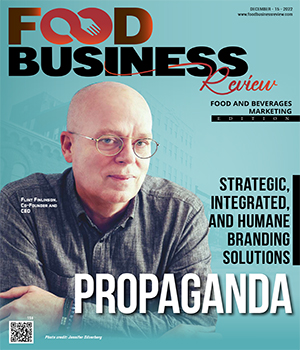
Food and Beverages Marketing - 2022
Nominate a Company
Usually, the qualified subscribers of our magazine nominate companies with whom they have collaborated and experienced exceptional results to be in this list. Did a company you recently worked with give you stellar results and ROI? Did it turn out to be one you would wholeheartedly recommend to peers? Or do you know of such an outstanding company through your network? Please fill in the details below and nominate them to be featured here.

Top Food and Beverages Marketing Companies

Propaganda is a strategic branding and communications firm providing fully integrated communication and branding solutions to aid organizations in building their business. The company specializes in CPG, food and beverage, retail, restaurant and hospitality, and beauty industry. ... read full profile
Agile Digital Marketing leverages the advantage of inbound marketing strategies to build compelling brand recognition for food and beverage companies.It serves food companies and their supply chain, from manufacturers to distribution and brokerage channels, down to the retail consumer packaged goods (CPG) level. ... read full profile

Butin PR’s approach to garnering earned media coverage goes far beyond just recycling media relationships. Instead, they opt for a one-to-one media outreach approach from dedicated publicists, which leads to happy journalists and lifelong press relationships.
... read full profile
FRESH is a marketing and communications agency connecting companies with consumers through creative campaigns that spotlight science, nutrition, and the latest trends. Their unique combination of communication, marketing, and nutrition expertise helps clients stand out and succeed in an increasingly crowded industry. ... read full profile

Gluttonomy is a marketing agency for the food and beverage industrywhich offers strategic consulting, branding and design, digital marketing, sponsorship, and food marketing. ... read full profile
Marriner Marketing, is a full-service marketing solutions agency, that caters to the niche needs of the food, beverage, and hospitality brands using clear and engaging communication. ... read full profile

Upstart Food Brands is a virtual, boutique, full-service branding agency dedicated to the needs of small and startup food businesses. Everything from their industry experience to their business model and the partnership philosophy gives their clients a distinct advantage. ... read full profile
Firebelly Marketing
Firebelly Marketing is a social media marketing agency with a single mission: to make brands more likable via social media. By implementing creative ideation, Firebelly Marketing helps brands differentiate between the vast availability of food and beverage products across an ever changing eCommerce landscape.
The Food Group
The Food Group is a premier full-service agency that blends food, culture and marketing expertise to deliver powerful integrated ideas that feed our clients’ success. With over 40 years of building some of the world’s most iconic brands and businesses, The Food Group uniquely positioned to deliver a full suite of marketing, advertising, planning and public relations services designed to connect brands with people, buyers with sellers and sales with marketing.
Food and Beverages Marketing Info
Q1
What Do Top Food and Beverages Marketing Firms Do?
Top Food and Beverages Marketing Firms design and execute campaigns tailored to how food products are discovered, evaluated and purchased. Their work spans brand positioning, packaging strategy, retail promotions, digital campaigns and channel-specific messaging across grocery, foodservice and e-commerce. They often coordinate product launches, seasonal campaigns and in-store visibility. A product can fail on shelf if messaging, pricing and placement are misaligned. These firms bridge product development, retail realities and consumer behavior, translating product attributes into clear reasons to buy.
Q2
Why Does This Category Matter Now?
Demand for Top Food and Beverages Marketing Firms is rising as brands navigate fragmented channels, private label competition and faster product cycles. Consumers move between online ordering, quick commerce and traditional retail, often within the same week. That shift forces brands to maintain consistent messaging across multiple touchpoints while adapting to platform-specific constraints. Shelf space is tighter and promotional windows are shorter. A delayed or poorly timed campaign can miss an entire buying cycle. Firms that understand retail calendars, distributor dynamics and digital shelf analytics are now central to growth
Q3
How Should Brands Evaluate Food and Beverage Marketing Firms?
Evaluation should go beyond creative output. Brands need to test how a firm handles real constraints: retailer requirements, packaging lead times and compliance with labeling rules. Ask how the firm adapts a campaign for both in-store displays and online listings. Review past work for category-specific insight, not just visual quality. For example, can the firm explain how it improved conversion on a crowded product page or increased off-take during a limited promotion window? Food and beverage marketing agencies that cannot connect strategy to sell-through data are difficult to justify.
Q4
What Business Value Do Top Food and Beverages Marketing Firms Deliver?
The value shows up in measurable outcomes: stronger shelf presence, improved product velocity and clearer brand differentiation. Top Food and Beverages Marketing Firms help brands avoid common execution gaps, such as mismatched pricing tiers, unclear product claims or packaging that does not stand out in real retail conditions. They also align messaging across distributors, retailers and digital channels. When done well, marketing reduces discount dependency and supports repeat purchase. Margins in this category are often thin, so even small gains in conversion or retention have a direct financial impact.
Q5
How Are Technology and Data Changing Food and Beverage Marketing?
Technology has shifted the work from broad campaigns to continuous optimization. Firms now rely on retail analytics, shopper data and digital shelf tracking to adjust messaging in near real time. Product images, descriptions and reviews influence buying decisions as much as physical packaging. Some firms integrate campaign performance with supply chain signals, adjusting promotions based on inventory levels. If a product runs out during a campaign, the spend is wasted. The stronger firms build feedback loops between marketing, sales and distribution rather than treating campaigns as isolated efforts.
Q6
What Should Brands Prioritize When Comparing Top Food and Beverages Marketing Firms?
Brands should prioritize category familiarity, execution discipline and channel coverage. Top Food and Beverages Marketing Firms need to demonstrate how they manage timelines tied to production, distribution and retail cycles. Look for clarity on how they handle cross-channel consistency, from store shelves to online marketplaces. Ask how performance is tracked and reported, and whether insights lead to concrete adjustments. A polished campaign means little if it cannot be implemented across retailers or sustained over multiple cycles. Practical execution tends to separate capable firms from those that only present well.
